
Optical probes for wafel-level testing and co-packaged optics
Keystone Photonics is now a part of FormFactor. Learn more

Product Range
Custom Optics
 |
Lens with high NA for die-level laser and PIC testing. |
 |
Lens with low NA for die-level spot-size converter testing. |
 |
Large working-distance for wafer-level testing of grating couplers with well-defined best coupling position. |
|
Collimated output with up to 30 μm MFD for coupling to other lensed devices. |
 |
Asymmetric lenses with 0° to 20° deflection. |
 |
90° deflection for wafer-level testing of edge-coupling devices in 100 μm trenches. |
 |
Large working-distance for extra clearance. |
 |
85° emission for better top-view camera vision. Other angles available upon request. |
 |
More options and design&simulation service available upon request. E.g. cryo compatible, extended wavelength range, anamorphic lens designs, metal-coated optics etc. |
Fiber Arrays
 |
Fiber arrays up to 64 channels |
 |
Lensed fiber arrays for both die and wafer level testing of angled facets (e.g. InP laser, SOA, SLED). |
 |
Any pitch, fiber type, mixed fiber arrays, PM fiber arrays, cryo, UV, VIS NIR fiber arrays are available upon request. Every channel of a fiber array can be equipped with different optics. |
 |
Range of 3D-printed markers for top- and bottom-view camera alignment. Suitable for surface and trench coupling. |
 |
Photonic integrated circuits (PIC) can be used as a means for pitch equalization or pitch reduction to 20 µm. Such probe heads allow testing of ultra-low pitch photonic integrated circuits both using grating and edge-coupled devices. PIC may be equipped with 3D-printed mirror optics or a straight lens.
|
Custom Fiber Array Mounting
|
|

Test & Validation
|
|
Optional mode-field and transmission measurements. |

Request Form for Standard Products
Standard Corpus Types (µm)
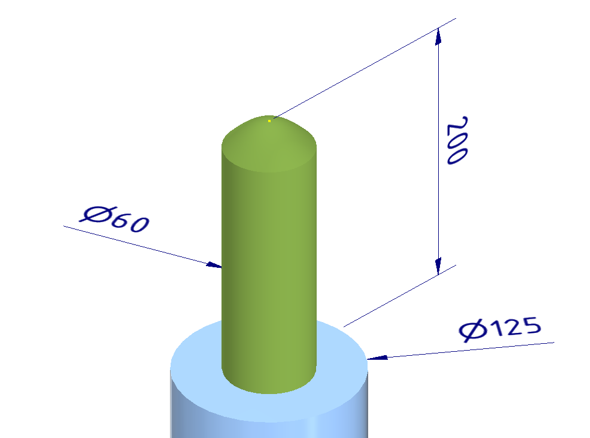
Corpus type A
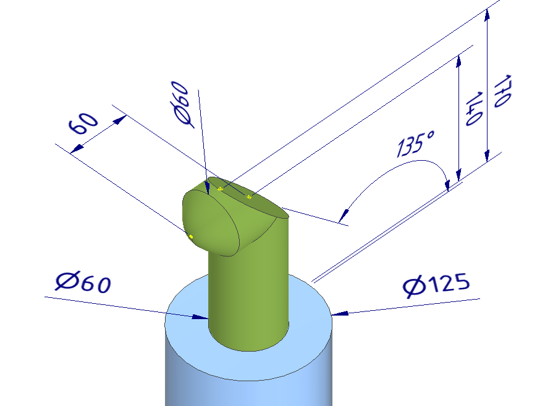
Corpus type B
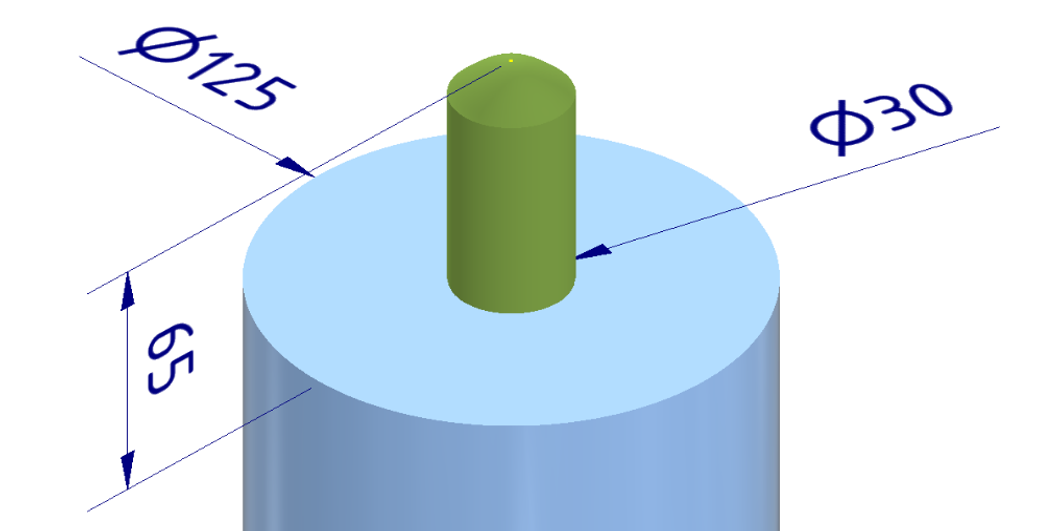
Corpus type C

Corpus type D
Optional markers compatible with commercial probe stations

- All calculations were done with Gaussian approximation
- All MFD are specified at 1/e² intensity level
- MFDs correspond to UHNA4 and SMF28 fiber (except for smallest MFD)
- WD is measured from apex of lens to waist
- Measured coupling efficiency is pending, estimated coupling is 0.5 dB for large MFD,
1 dB for smallest MFD, TIR surface has 0.1-0.3 dB penalty
Our Technology in a Nutshell
Keystone Photonics‘ Wafer-Level Testing at ‚Optica Online Industry Meeting: PIC Packaging for Volume Production‘
Publications

Wafer-Level Testing for Photonic Devices
At Keystone Photonics, we closely follow emerging innovations that align with our mission to push the boundaries of photonic integration and test solutions. A recent article in the September–October 2025 issue of Chip Scale Review highlights just how transformative micro-optics have become for the future of AI hardware scaling and semiconductor testing.
The report underscores micro-optics as a key enabling technology, offering an order-of-magnitude improvement over conventional approaches across a wide spectrum of industrial and research applications. Among the key innovations discussed:
- Scalable optical probes supporting 64+ channels for high-density optical I/O testing
- Automated alignment and calibration features, reducing setup complexity and operator dependence
- Ultra-fine pitch arrays capable of probing devices with 20μm pitch, supporting next-gen chip architectures
- Smart probes with integrated distance sensors to prevent wafer damage and improve throughput
These advancements are further enhanced by seamless integration into wafer-level testing setups, using standardized mechanical interfaces and auto-alignment capabilities.
Importantly, the technology supports double-sided wafer testing and finally opens the door to CPO testing.
We invite you to explore how our technology can support your next-generation optical test and packaging challenges.
Read the full article here: Wafer-level testing of photonic devices – Chip Scale Review, Sept–Oct 2025
Authors: Philipp Dietrich, Andrés Machado, Florian Rupp, Roman Zvahelskyi